have a question? Get in touch
Prefer to email us direct? click here
Follow us

Some FAQ’s
In 2026, the Sea Angling Diary Project Steering Group was established. The group acts as an advisory forum to provide practical input into the design and operation of the project, strengthen confidence in how recreational sea angling data is collected, interpreted, and used, and improve alignment between angler participation, fisheries science and management needs.
Catchwise and the Sea Angling Diary are ran both by Substance. Catchwise is a year project that runs from July 2023 to July 2024 for shore anglers, and October 2023 to October 2024 for charter boats. Catchwise was set up to understand the bias in the Sea Angling Diary Project, and determine the confidence in the data that is produced by the Sea Angling Diary. The outputs for the two projects will be compared in a robust analysis and modelling exercise conducted by Cefas. The results of Catchwise will inform how the Sea Angling Diary project data is used in the future.
To find out more about Catchwise, click here.
The Sea Angling Diary Project has two components:
1. A nationwide face-to-face survey to estimate sea angling participation and effort, using questions added to the Watersports Participation Survey each year;
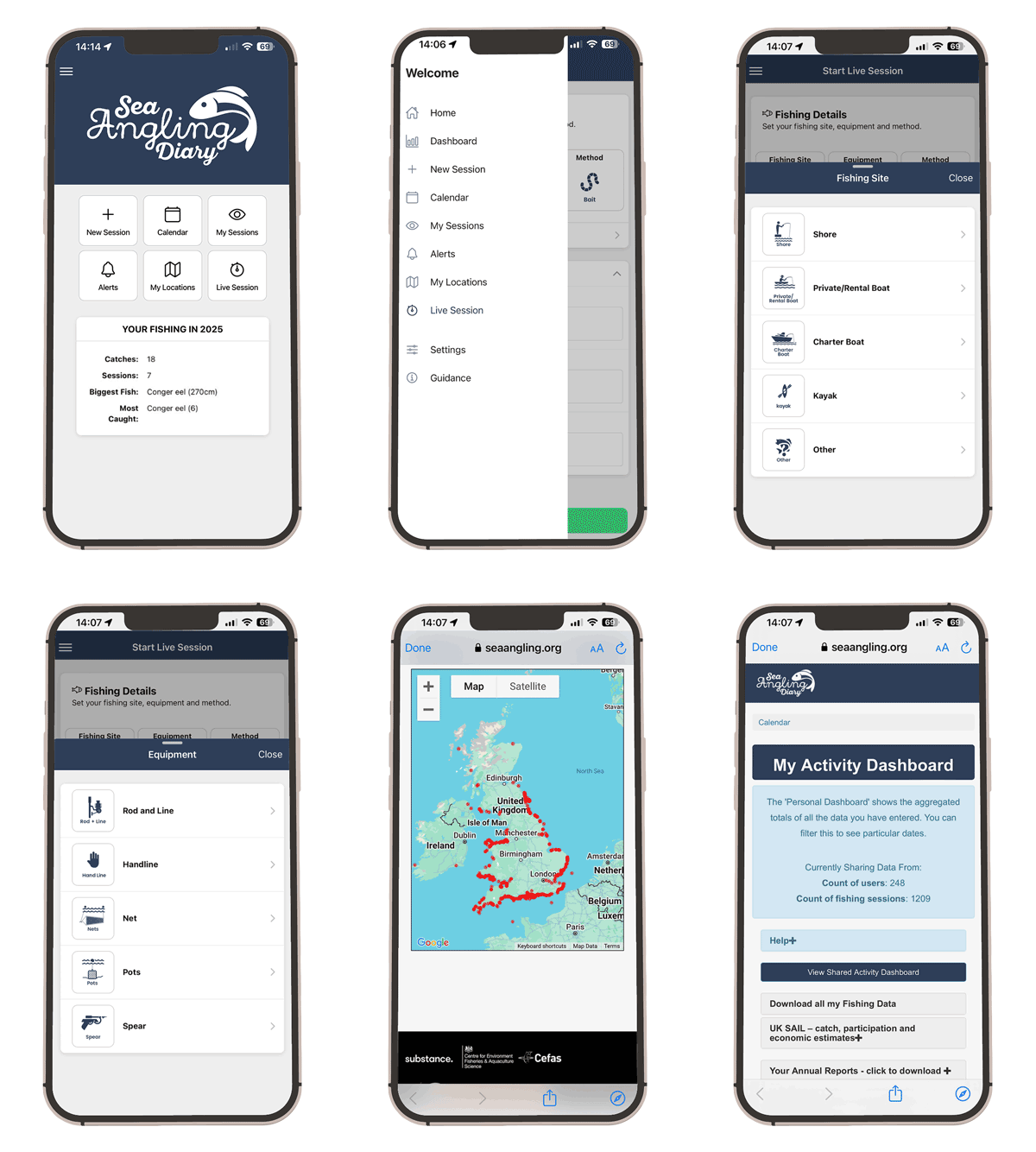
2. A ‘diary panel’ survey involving the completion of monthly diaries, over a year, in a mobile app and online tool by those who agree to take part, collecting information about:
- Fishing sessions;
- Methods, platforms, duration and whether or not they are targeting a species;
- Catches including kept and released fish (including lengths);
- Expenditure;
- Social impacts.
Estimates of recreational sea angling catches and trip expenditure from the diary panel are used to derive estimates for the whole population of sea anglers, based on estimates of the total nationwide numbers of sea anglers from the Watersports Participation Survey. The different surveys will be broken down by region, demographic characteristics and frequency of angling to correct for any biases caused by the diary panel not being fully representative of the total population of sea anglers. There are many potential ways of collecting information on recreational sea angling, all of which have different strengths. This design has been selected to give a reasonable level of precision and minimise bias using experience from previous studies, and used routinely by other scientists in Europe, USA, Australia and New Zealand. Overall, this design was thought to provide the best value for money and give reasonable estimates.
As stated above, the Government would not wish to impose unnecessary regulatory burdens on sea anglers. Angling surveys and other surveys may indicate that there are species in particular areas where recreational activity could be considered to be having a significant additional impact, which is the case for sea bass and could also be true for some other species. If this is the case, UK governments would initially prefer to develop voluntary measures which will reduce the recreational impact on the stock, but not affect the enjoyment of the sport. This may take the form of catch-and-release after a certain number of fish have been retained or voluntarily avoiding areas where large quantities of small fish are being caught. This may be seen as a negative effect of surveys, but in reality the absence of such data could lead to even more precautionary measures and more restrictive controls due to a greater uncertainty about the total impacts of fishing. Of course, angling surveys may demonstrate that recreational activity is having a negligible effect on stocks, and there is no need to seek additional voluntary or regulatory measures for those stocks. However, we cannot assume that will be the case, which is why it is important to have data collected as accurately as possible. Well-informed decisions are important for the benefit of all stakeholders.